
The Rail At The Front
Stage Barrier Rental in Winnipeg
Barricade for the front of a stage. Aluminium sections bolted into one continuous line, held down by nothing more than the audience standing on its base, and a step behind the panel where your security team works. Stocked in Winnipeg, delivered province-wide.
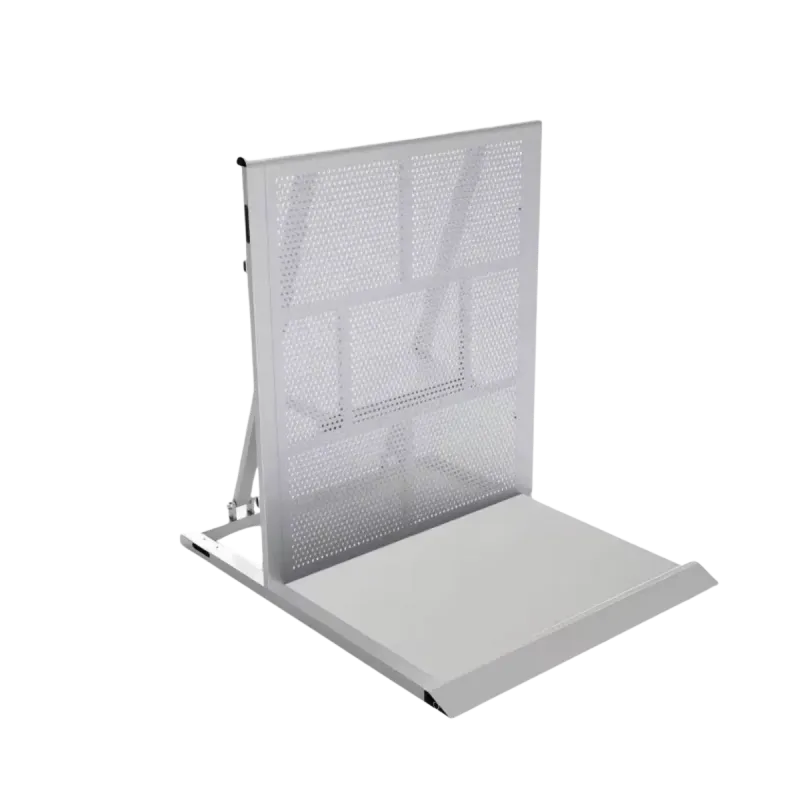
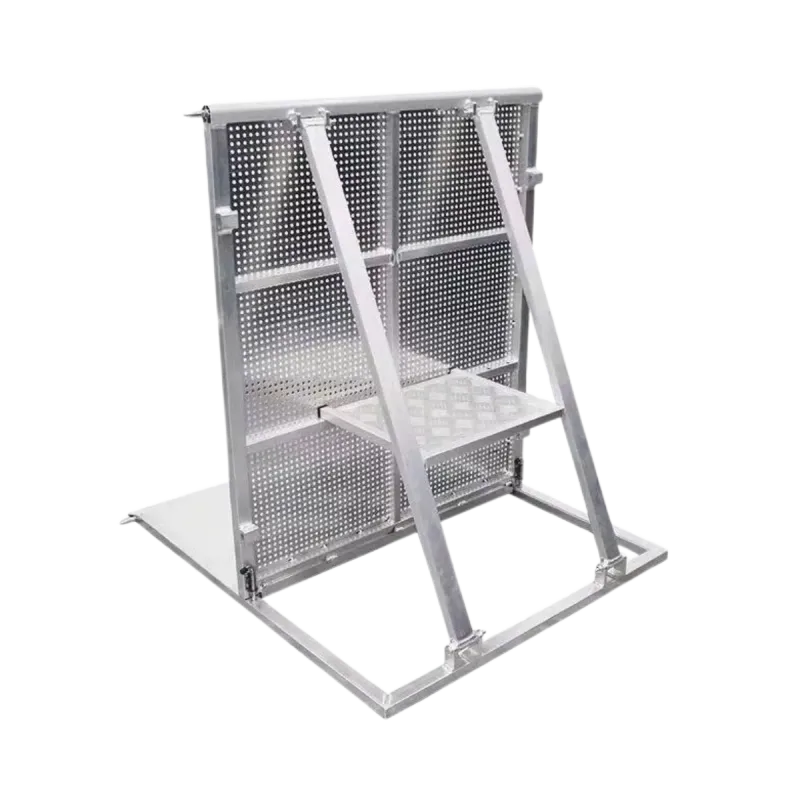
Image 1 of 2
What you’re renting
A section is welded from three pieces — the panel facing the audience, a brace raking back from it, and the floor that brace comes down onto. All the cleverness is in the floor. It extends 4.1 ft back beneath the front rows, which means the people leaning on the rail are standing on the thing that keeps it still: more pressure simply loads it further. There is nothing to stake, ballast or drill.
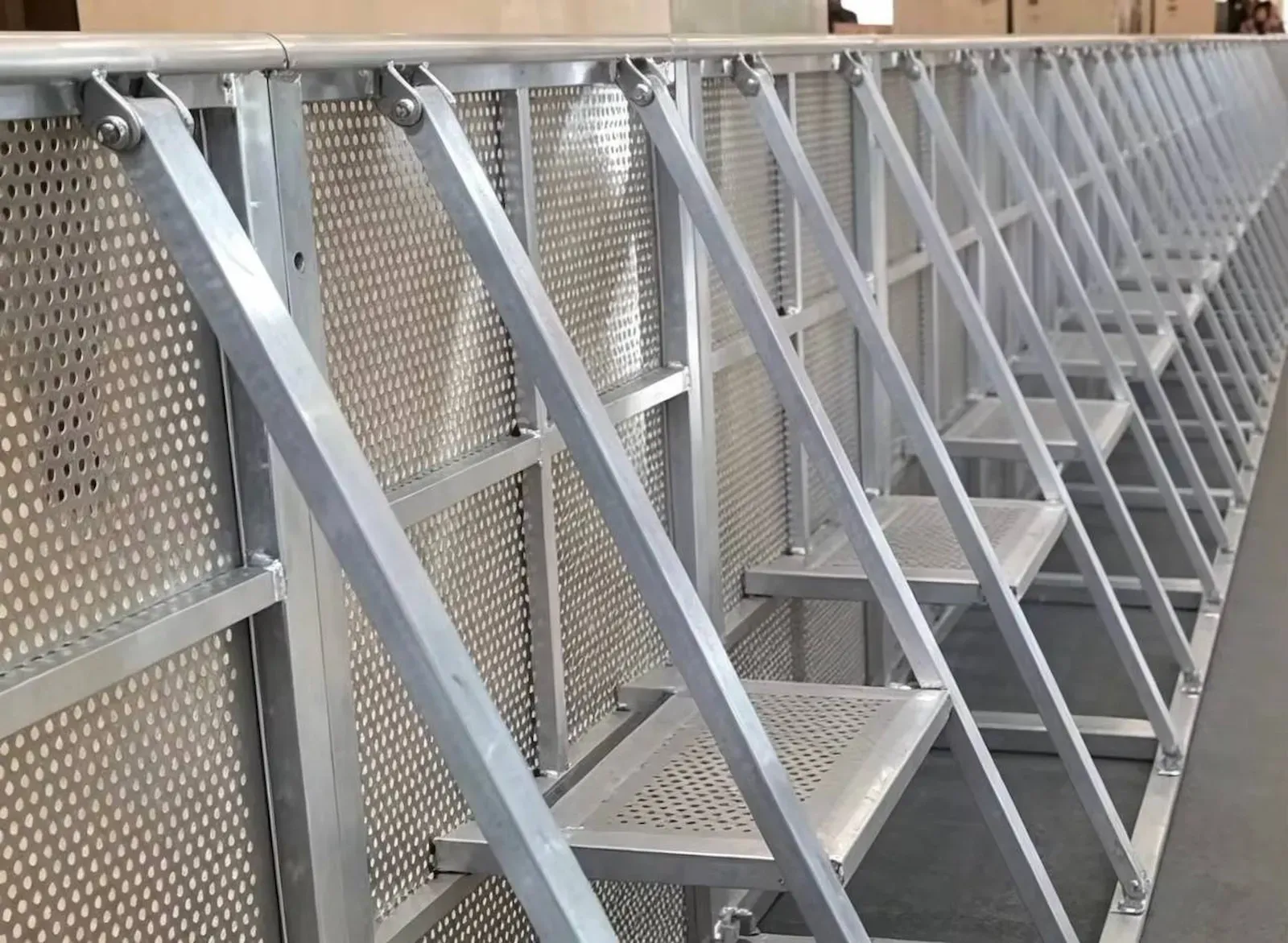
The face is perforated sheet rather than open bar, and the reason is climbing: an open frame hands somebody a foothold, a flat panel does not. Top rail height is 3.9 ft, which puts it at forearm level for the front row while staying low enough for a camera to shoot over. Behind the panel there is a step at working height — that is where security stands facing out, and where anyone lifted across the rail comes down.
Sections join with a bolt rather than a hook, and under load that distinction is everything. Hooked joints can work themselves apart when the pressure runs sideways down the line. Bolted, twenty sections stop being twenty separate objects and start being one — the whole run moves together or it does not move.
Specifications
| Material | Aluminium |
|---|---|
| Section size | 3.3 × 4.1 × 3.9 ft (1 × 1.25 × 1.2 m) |
| Stage front per section | 3.3 ft (1 m) |
| Height at top rail | 3.9 ft (1.2 m) |
| Base depth | 4.1 ft (1.25 m) |
| Front panel | Perforated sheet within the frame |
| Section connection | Bolted, section to section |
| Platform step | At working height behind the panel |
| Rental period | From 1 day to a month+ |
Where stage barriers are used
Wherever the audience stops walking past something and starts leaning on it, this is the rail you want:
Front of stage
The main run — audience held off the deck edge, and away from the wedges.
Working lane for crew
The gap between rail and stage where security, medics and photographers stand for the whole set.
Splitting the pit
A second line dividing accessible or VIP space from general admission, each half with its own way out.
Media and photo pens
A sealed box against the rail for accredited shooters, closed off from everybody behind it.
Wrapping the corners
Legs turned back at both ends, so sideways pressure has somewhere to land.
Protecting the mix position
A boundary drawn around front-of-house desks, delay towers and all the cable feeding them.
Festival stages on grass
Turf you cannot drive anything into, where the base is doing all of the holding.
Barricade breaks and egress
Openings designed in from the start, so nobody is undoing bolts on a loaded line mid-show.
Stage barriers or crowd control barriers?
Both are barrier, and a festival usually has both on site. The deciding question is not how big the crowd is but which way it is pointing:
Crowd control barriers suit a line that people travel alongside: a site boundary, a shut street, a queue that has outgrown rope. Galvanized steel, hooking end to end, quick to run out over distance.
Stage barriers suit a line people push into: a stage front, a pit, a rail the front row will hold for an entire set. Aluminium, bolted, and anchored by the crowd’s own weight.
Closing a road or fencing a site instead? Head to crowd control barriers →. Most festival orders carry both anyway: aluminium across the stage, steel for everything beyond it.
How many stage barriers you need
Everything is counted in sections. Each covers 3.3 ft — one metre — of front, so a 40 ft stage needs thirteen and a 60 ft stage nineteen. What you measure is the width you intend to hold, not the width of the deck; the rail should finish past the edge of the stage rather than level with it.
Now add the returns. Turning both ends of the run back toward the stage is what prevents a crowd walking around the end of your line, and each leg consumes sections of its own — a pair of 10 ft returns comes to three per side, six on top of the front count. Forgetting them is the commonest reason a barricade plan comes up short on the day.
Photo pens and pit splits are runs in their own right and get counted the same way. Work the barricade breaks into the plan before totalling rather than afterwards: an access gap does not take a section off the count, it turns one run into two, and each of those rounds up on its own.
Send the stage width, say whether returns are wanted, and mark any pit split or photo position — the section count comes back with the quote.
Delivery and setup
We drive it anywhere in the province, and the collection afterwards sits inside that same line rather than arriving as a second charge. Aluminium barricade takes more placing than steel barrier does and every joint is bolted through, which is why most orders travel with our crew: give us the site plan and the load-in window and the run stands bolted and torqued before doors open.
Dates, section count, address — send those three and the quote arrives itemised. Summer is when this particular item empties the yard, so a festival weekend is one to secure well ahead. Any other time of year carries no cut-off at all.
FAQ
How much does it cost to rent stage barriers in Winnipeg?
The unit is the section, and the figure follows two things: how many your front demands and how long the show occupies them. Tell us the width of the front, flag any pit lines or a media pen, and include the load-in window — the quote comes back broken out.
Which of the two barriers does our show need?
Ask which way the crowd faces. Galvanized steel that hooks together — crowd control barrier — is for lines people travel alongside: boundaries, road closures, long queues. Bolted aluminium — stage barrier — is for lines people push into. A festival normally wants both, aluminium at the stage front and steel around everything else.
Do we have to ballast or stake it down?
It needs neither. Running 4.1 ft back under the front rows, the base is what the crowd is standing on — so the harder anybody leans, the more weight goes onto the thing holding the rail still. Which is precisely why it works on grass, on a plaza, and on any surface nobody is permitted to drill.
Can we design gaps in for medics and security?
Yes — and they want designing in rather than cutting on the day. Barricade breaks get set out as part of the run itself, so staff can get in and guests can be brought out without anybody removing bolts from a line under load. Give us the stage width and where the openings go, and they arrive inside the section count.
How early should stage barrier be booked?
This is the item summer empties first, which makes a festival date the one worth securing furthest ahead. Away from festival season nothing is off-limits on notice — give us the dates and we will tell you what stands against them.